
The Dice Tax
A bizarre phenomenon in Jewish history
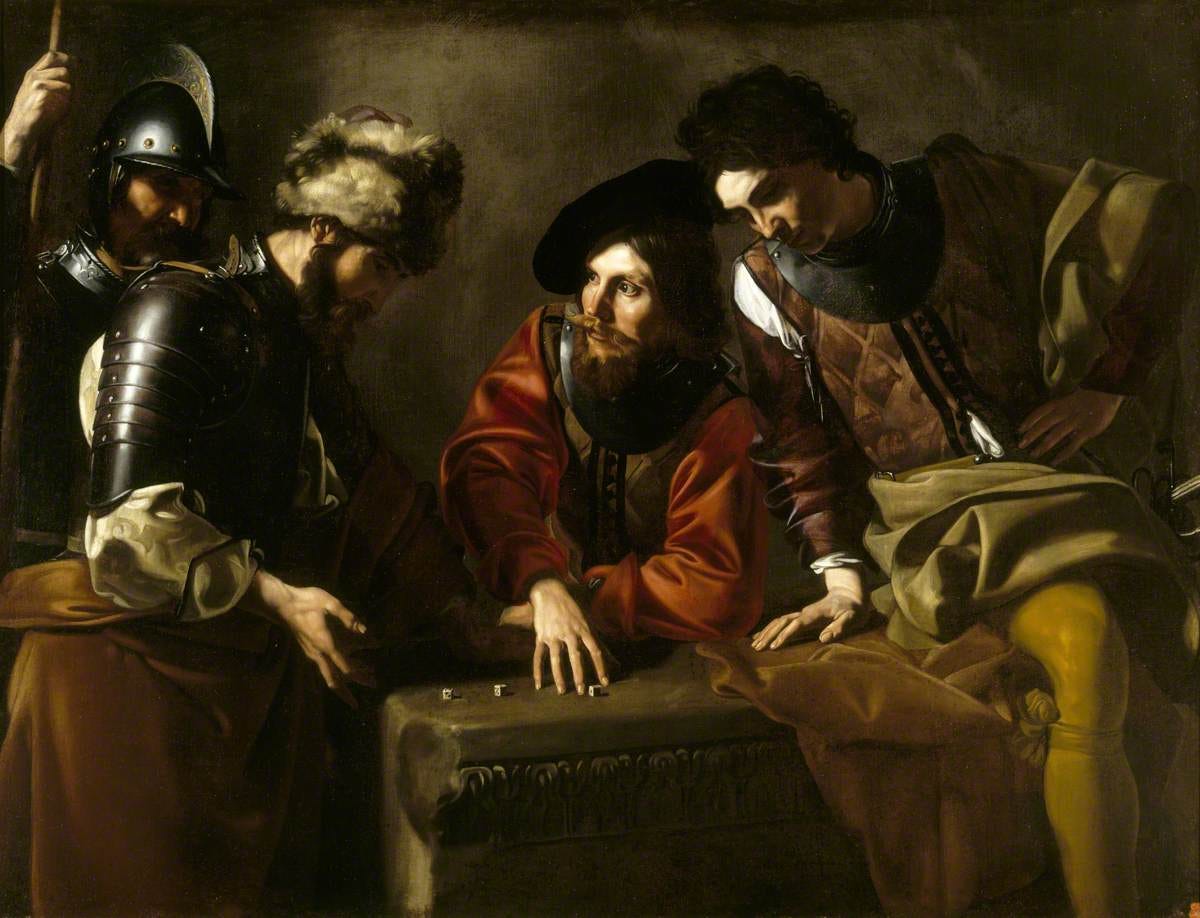
Ever since Roman times, Jews living under oppressive regimes have been likely to find themselves subject to discriminatory taxation. The earliest example was the Fiscus Judaicus, introduced in the Land of Israel by the Romans after they destroyed the Temple in the year 70 CE. The Romans demanded that the voluntary, half-shekel tax that Jews used to donate to the sanctuary each year, was to become compulsory, and paid to the Temple of Jupiter in Rome.
The Fiscus Judaicus was just one of the taxes the Romans imposed on their Jewish subjects in the territory they called Judea. They also charged taxes on land and the transit of goods, as well as tolls on bridges and highways. The Jewish population resisted paying them, regarding these taxes as nothing more than robbery by a foreign occupier. Their refusal was so widespread that it led to the Talmud discussing the legality of tax avoidance. Rabbi Yohanan, the most prominent legislator in late 3rd century Palestine, asserted that in some cases it was acceptable to make a false declaration in order to avoid paying the Romans[i]. In Babylon however, the legal authority Shmuel insisted that all taxes, even those specifically imposed upon Jews, were to be paid. He formulated the principle that, irrespective of Jewish law, in financial matters, the law of the land where one lives must be followed. It is a principle that is still followed today.
In medieval Europe, Jews were subject to a variety of taxes. They varied from place to place but were all generally designed to regulate Jewish movement and settlement, as well, of course, to raise money for the local ruler. The Leibzoll was the best known of these taxes, a toll payable by travellers when crossing from one principality to another. The classic example was the burden imposed on Jewish merchants from Silesia who, when travelling to the annual fair in Leipzig, a distance of little more than 100 miles, had to cross the frontiers of fourteen small principalities. They had to pay the Leibzoll at each one. Then, when they got to the fair they had to pay additional taxes to trade.
In the Ottoman Empire Jews had to pay the Rav Akçesi, or rabbi tax, ostensibly to grant them permission to appoint a rabbi. Poll taxes were imposed on Jews living in Hungary and Poland, while in Russia, at certain times, Jewish men were subjected to a Beard Tax. As oppressive as these taxes were, however, none were more bizarre, humiliating and pointless than the medieval Dice Tax. It served no purpose at all. It didn’t even raise any money.
